The Simple Hidden Mechanism Behind Every Revenue Plateau.
There is a device in your home that most people never think about.
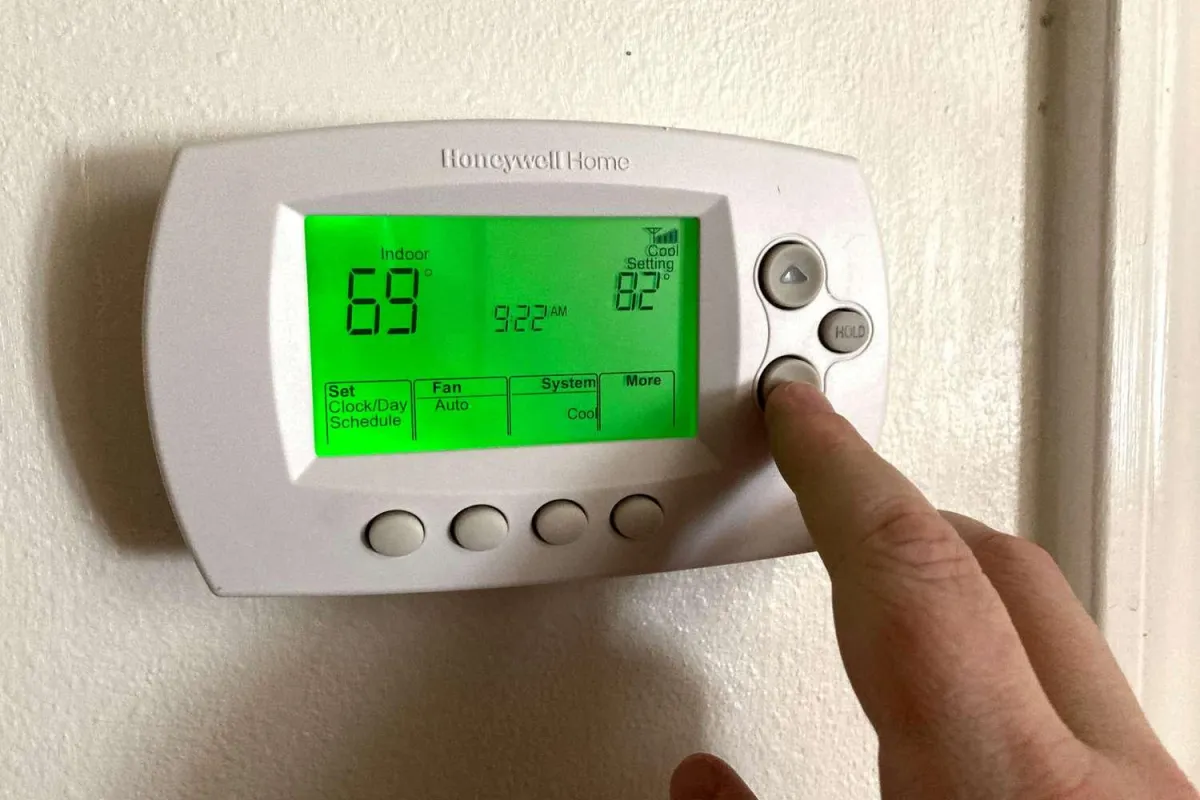
A thermostat.
You set it to a temperature.
The room gets too cold, the heating kicks in and brings it back up.
The room gets too hot, the system kicks in and brings it back down.
The thermostat does not care what temperature you want in the moment.
It cares about the temperature it has been set to.
And it will correct back to that setting every single time, automatically, reliably, without asking your permission.
Now think about your revenue for the last twelve months.
When it dropped below a certain number something kicked in. Fear. Urgency. A version of you that got focused and started taking action again. The revenue came back up.
When it climbed above a certain number something else kicked in. A slowdown you could not fully explain. Habits that started cracking. Momentum that started leaking. The revenue came back down.
Same ceiling. Same floor. Same band.
Over and over.
That is not bad luck. That is not market fluctuation. That is not a strategy problem.
That is an internal thermostat.
And until you understand that your revenue plateau is not a sticking point but a set point, you will keep trying to solve it with tools that cannot touch it.
Why The Thermostat Metaphor Is More Literal Than You Think
Most people hear this kind of analogy and nod along without fully absorbing what it means.
So let me be precise about what is actually happening.
Your brain has spent years building a model of who you are and what is normal for you.
Not a conscious model. An operating one. Built from accumulated experience, repeated patterns, conclusions drawn in specific moments about what is possible and what is congruent with your identity.
That model has a revenue range embedded in it.
Not a number you chose. A range that formed through the combination of your highest consistent results and your lowest tolerable outcomes over time.
When your revenue drops below the bottom of that range, the model registers an emergency.
The fear and urgency that kick in are not just emotions. They are the brain's correction mechanism bringing the temperature back up to the set point.
When your revenue climbs above the top of that range, the model registers something equally uncomfortable. Not fear of failure. Something quieter and more insidious. A subtle wrongness. A sense that this level is not quite right. Not quite you. Not quite safe to sustain.
And so it corrects back down.
The ceiling is not a wall you are failing to climb over. It is a set point your internal operating system keeps correcting back to.
This is why every new strategy, every coaching program, every burst of motivated action produces a temporary lift and then the ceiling comes back. You changed what was above the set point.
The set point itself was never touched.
The Evidence You Have Been Ignoring
Look at your revenue history honestly.
Not the best month. The pattern.
If you have been in business for more than a year you will almost certainly see it clearly when you look for it.
You will notice a range, a certain revenue number / top you consistently approach and fall back from.
And a bottom you reliably recover from.
The range might be $10,000 to $20,000. It might be $30,000 to $50,000. It might be $1MM to $3MM, $10MM - $50MM.
The specific numbers are less important than the pattern they form.
Because here is what that pattern tells you.
Your revenue is not random.
It is not determined primarily by the market, the competition, the economy or your strategy in any given month.
It is regulated.
The regulatory mechanism is internal. It is consistent. And it has been operating beneath your awareness the entire time you have been trying to fix the problem above it.
Every month you have spent trying to break the ceiling without addressing the set point is a month the thermostat has been winning.
Why Breakthrough Months Always Feel Different...And Then End
You have had them. Months where everything clicked.
The leads were coming in. The closes were happening. The execution was sharp. The revenue hit a number that felt like finally, like this was the version that was going to stick.
And then it did not stick.
Here is what was actually happening in that breakthrough month.
Something — fear, urgency, external pressure, a competitor passing you, a financial necessity, a powerful moment of clarity — temporarily overrode the internal regulatory mechanism.
The thermostat was drowned out by something louder.
So the temperature climbed above the set point.
It felt extraordinary because you were operating outside the range your system had been trained to produce. The actions were sharper. The follow through was cleaner. The results were responding.
But the override was temporary.
As the fear faded, as the urgency dissipated, as the external pressure lifted — the regulatory mechanism reasserted. Quietly. Without announcement.
The habits started slipping. The consistency started fragmenting. The output started dropping.
And the revenue corrected back toward the set point.
The breakthrough month was not a failure. It was proof of what is possible when the regulatory mechanism is bypassed.
The problem is that bypassing it temporarily is not the same as changing it permanently.
A thermostat that gets overridden for a week still corrects back to its setting when the override is removed.
The setting has to change. Not the temperature in the moment.
What Every Failed Solution Has In Common
Think about everything you have tried to break through your revenue ceiling problem.
New offer. New strategy. New coach. New systems. New accountability structure. Better content. Better sales process. More outreach. More discipline. More effort.
Every single one of these operates above the set point.
They improve what happens at the temperature level, the actions, the strategy, the output.
Without touching the thermostat setting underneath.
Which is why they all produce the same result.
A temporary lift. A period of improved performance. Then a gradual or sudden return to the familiar range.
Not because they were bad solutions. Because they were solutions to the wrong problem.
You have been trying to change the temperature. The temperature is a symptom. The thermostat is the problem.
And the thermostat is not accessible through strategy, motivation, accountability or information.
It is accessible only through a process that operates at the level where the set point actually lives — the identity and belief level that your operating system runs on.
Everything above that level is downstream of it. Which means everything above that level is a symptom of it. And treating symptoms does not change the set point.
What Changing The Set Point Actually Looks Like
This is the part worth being precise about.
Changing the set point is not a motivational exercise. It is not deciding to believe you deserve more. It is not affirmations or visualisation or any of the soft approaches that have given this kind of work a reputation for being vague and ineffective.
It is a specific process that identifies exactly where the current set point came from — the specific internal mechanics that established this range as the operating norm — and changes them at the root.
When the set point changes something measurable happens.
The ceiling that was being actively regulated starts to lose its pull.
The correction response that used to activate at the top of the range stops firing with the same force.
The actions that were inconsistent become consistent, not because of discipline or accountability but because the internal resistance to them has been reduced.
And over time the new higher level stops feeling like a ceiling and starts feeling like the floor.
The thermostat has been reset. And it now regulates around a higher set point rather than correcting back to the old one.
This is not a temporary lift. It is a permanent change to the mechanism that was producing the plateau.
The ceiling does not come back because the thing that was setting the ceiling has been changed.
The Question Worth Sitting With
How many times has your revenue corrected back to the same range?
How many breakthrough months have been followed by a return to the familiar band?
How many new strategies have produced a lift and then watched the ceiling reassert?
If the honest answer is more than twice, the pattern is not coincidence. It is regulation.
And the question is not what to try next above the set point.
The question is what it would take to change the set point itself.
That is the only question that leads to a permanent answer.
The Next Step
I put together a full video that explains exactly what the internal mechanism creating your revenue set point actually is — what it is called, how it operates across every area of your business and personal performance, and what the process for changing it permanently actually involves.
If the thermostat pattern described in this post maps to your experience, if you have watched your revenue correct back to the same range more than once despite everything you have changed above it.
This video is the most direct explanation of why that keeps happening and what actually fixes it.